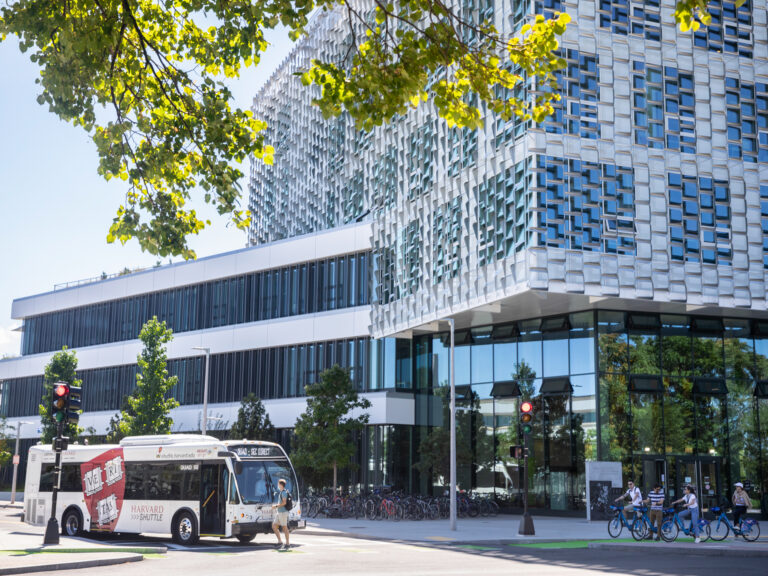
Accelerating a zero-waste future
Zero Waste
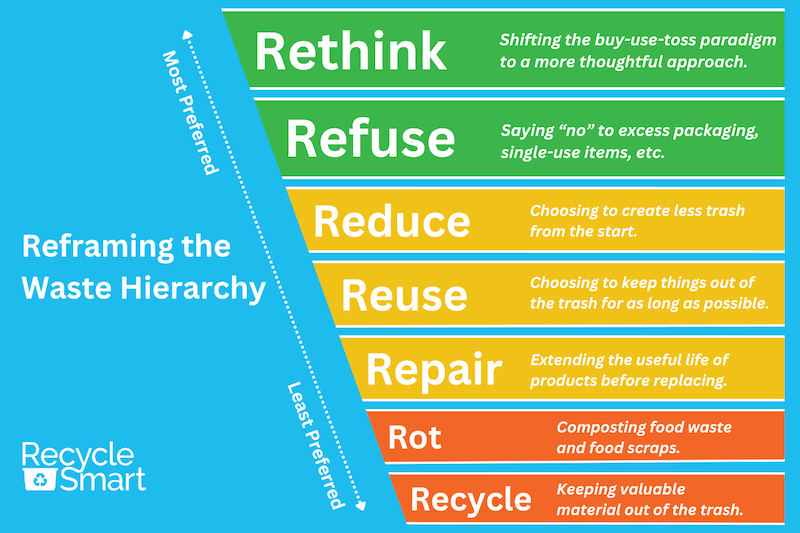
A zero-waste future requires a systemic approach. At Harvard, we aim to sustainably manage all waste streams—including plastics, electronics, recyclables, and organics, as well as construction, demolition, and hazardous waste—while prioritizing waste prevention and reduction.
Explore upcoming Zero Waste events:
Framework for Waste Stewardship
Zero Waste Future
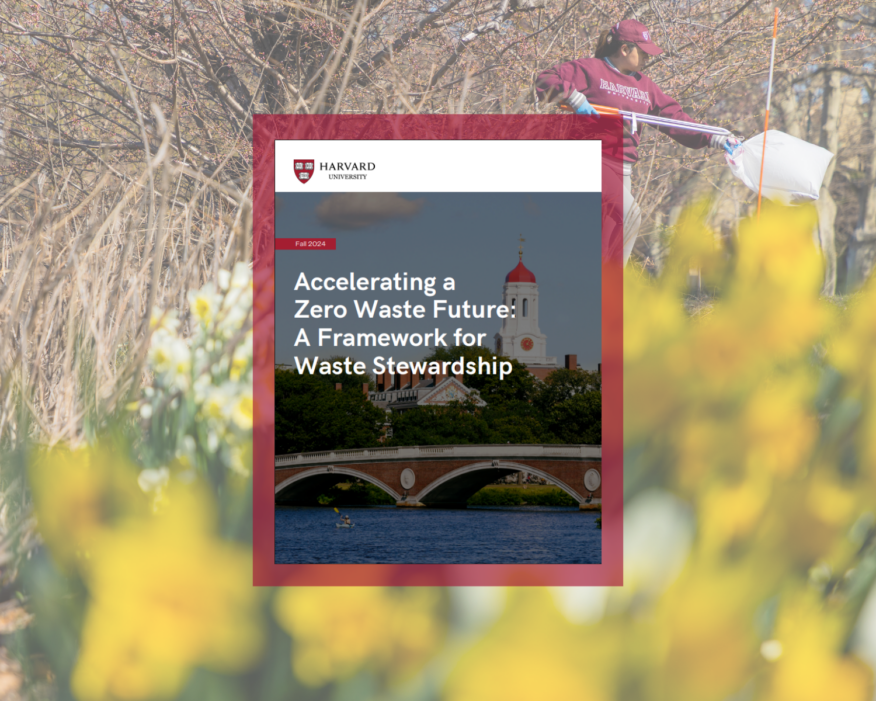
In 2025, Harvard launched “Accelerating a Zero Waste Future: A Framework for Waste Stewardship,” a new plan to transition our campuses to zero waste. Developed by the Waste Stewardship Steering Committee in collaboration with University leaders, the framework prioritizes waste prevention, reduction, reuse, and responsible recovery, and aligns with Harvard’s Sustainability Action Plan.
Events
Calendar of Events
|
Monday
|
Tuesday
|
Wednesday
|
Thursday
|
Friday
|
Saturday
|
Sunday
|
|---|---|---|---|---|---|---|
|
0 events,
|
2 events,
–
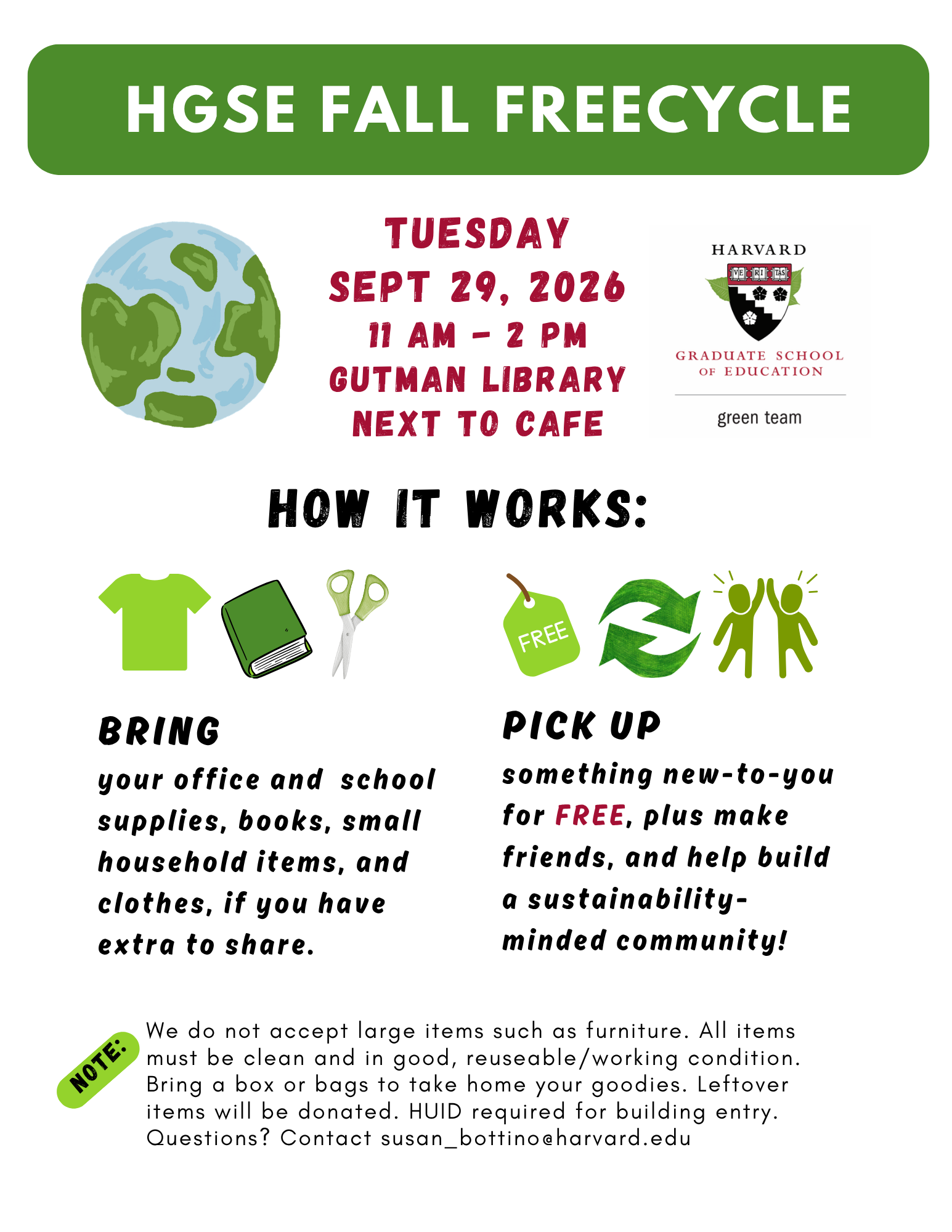
Bring your office and school supplies, books, small household items, & clothes, if you have extra to share. Pick up something new-to-you for FREE, plus make friends, and help build a sustainability-minded community! Note: We do not accept large items such as furniture. All items must be clean and in good, reusable/working condition. Bring a box or bags to take home your goodies. Leftover items will be donated. HUID required for building entry. Questions? Contact susan_bottino@harvard.edu Building on the success of the long-running Farmers’ Market, join us for the exciting “Plaza Open Market” this summer and fall featuring the farm-fresh vendors you know and love, treats to eat at the Plaza or take home, and monthly neighborhood and campus partners pop-up promotions, performances, and showcases. |
1 event,
–
Join us to connect and build a sustainability-minded community. We’ll be gathering to paint garden rocks while we discuss sustainability topics. HUID required for building entrance. Please RSVP to susan_bottino@harvard.edu |
0 events,
|
2 events,
–
Join us on October 2nd to hear from alumni, industry leaders, founders, and CEOs who are shaping the future of food and agriculture in the face of the climate crisis. Snacks and coffee will be served during the event, and the program will conclude with a networking session with the speakers—an opportunity to continue the conversation and build new connections.
–
How has food become less affordable for so many American families, and what will it take to close the gap? Denis McDonough, CEO of Feeding America, and Julie Gehrki, President of the Walmart Foundation, will discuss what they are seeing on the ground as food insecurity and affordability pressures continue to strain communities across the country. McDonough leads the nation’s largest hunger relief organization, working with a nationwide network of food banks to meet immediate need while advocating for longer term solutions; Gehrki oversees the Walmart Foundation’s investments in food access and affordability, including its Healthier Food for All initiative. In this fireside chat, they will explore how affordability pressures are showing up in communities, what approaches are proving effective, and what it will take from the private sector, nonprofits and philanthropy to make progress. The discussion will be moderated by Sara Boettiger, Senior Fellow at the Harvard Kennedy School working with the Global Food Systems Program. |
0 events,
|
0 events,
|
|
0 events,
|
0 events,
|
0 events,
|
1 event,
–
Climate warming is causing wildfire activity to increase in boreal forests and arctic tundra of the Far North. Fires are burning more deeply into thick organic soils and destabilizing permafrost, releasing carbon to the atmosphere that has been stored for centuries to millennia. At a global scale, these wildfires are impacting people through production of smoke and the release of greenhouse gasses that contribute to climate warming. At a local scale, increasing wildfire activity is creating new risks and vulnerabilities for local people that depend upon these ecosystems for their wellbeing. In this talk, Dr. Mack will discuss the ecological mechanisms that drive this positive feedback between wildfire and climate warming. She will explore how ecosystems and local human communities in Alaska are responding to increasing wildfire, and how we can employ emerging ideas in forest and fire management to reduce fire activity and promote human wellbeing. Dr. Mack will present two public lectures as part of Harvard’s annual Charles Bullard Lecture Series— in Cambridge on the evening of October 8, and in Petersham (and on Zoom) on the morning of October 9. |
0 events,
|
0 events,
|
0 events,
|
|
0 events,
|
0 events,
|
1 event,
–
Join us at our community Freecycle in the Smith Campus Center! Drop off reusable goods you no longer need, and browse an excellent selection of items brought by others. Popular items include books, clothes, and household goods. Only donate items in clean and working condition. Everyone is welcome, and no donation is necessary to shop! |
0 events,
|
0 events,
|
0 events,
|
0 events,
|
|
0 events,
|
0 events,
|
0 events,
|
0 events,
|
0 events,
|
0 events,
|
0 events,
|
|
0 events,
|
0 events,
|
0 events,
|
0 events,
|
0 events,
|
0 events,
|
0 events,
|
How is Harvard reducing waste?
Harvard is taking a systemic approach to waste prevention and reduction, aiming to ensure the materials that the University purchases and handles are used effectively and for as long as possible. Harvard is also strategically preventing waste throughout our value chain, while minimizing on-campus municipal solid waste (or trash) and sustainably managing other waste streams.
We are focused on piloting solutions on campus to reduce waste. The Waste Stewardship Committee developed guidance and resources to help Schools and Business Units create their own zero-waste plans and goals.
Harvard will continue to measure and report data annually for Harvard’s major waste streams.
Harvard Recycling & Waste Management
Harvard Recycling and Waste Management, the primary campus waste hauler office at Harvard, manages all waste streams across Harvard’s Cambridge, Allston, and Longwood campuses. Explore their resources:
More Resources from Harvard Recycling & Waste ManagementOpens new window
Piloting Solutions
A Zero-Waste Future
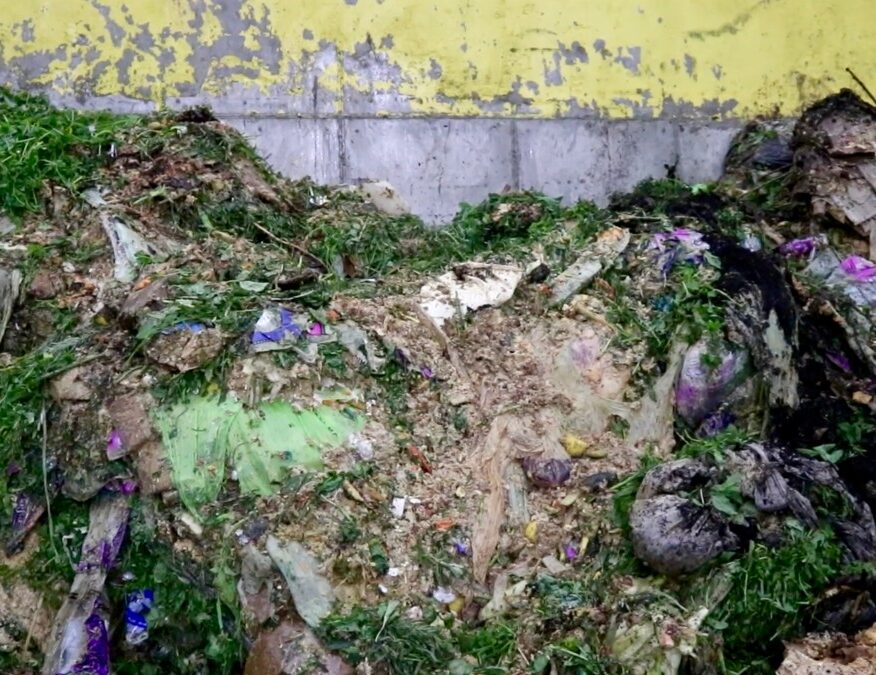
New life for Harvard’s compost
Compostable materials collected on Harvard’s campus are used to produce energy.
How We Operate
Harvard is accelerating new systems that enable healthier, low-carbon living—creating systems that can be scaled and adopted more broadly.