Landscape Sketching

Zoom

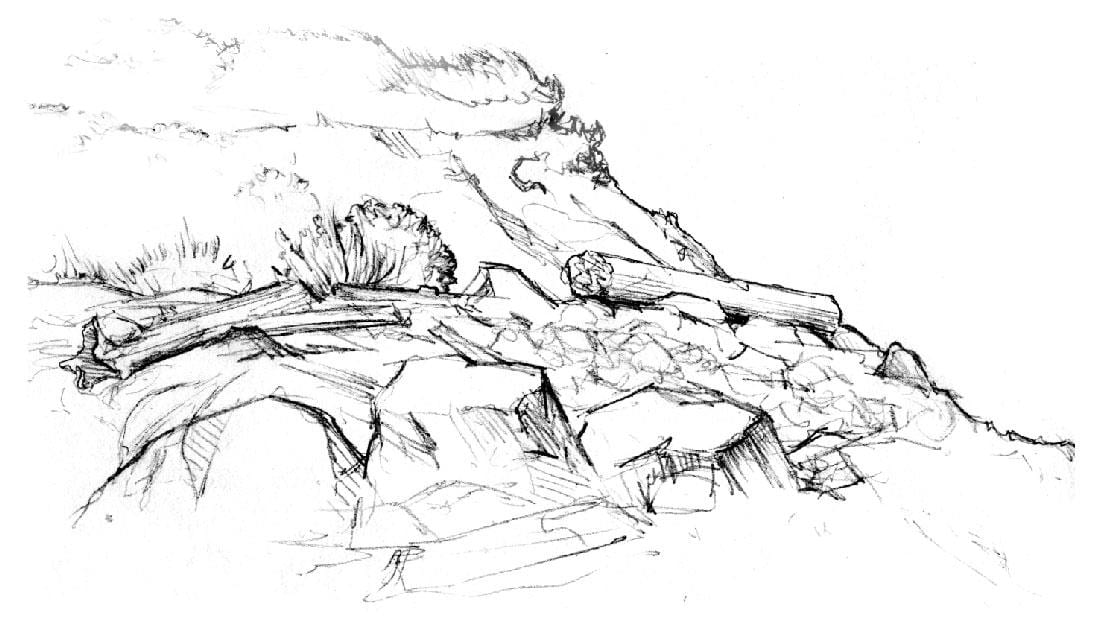
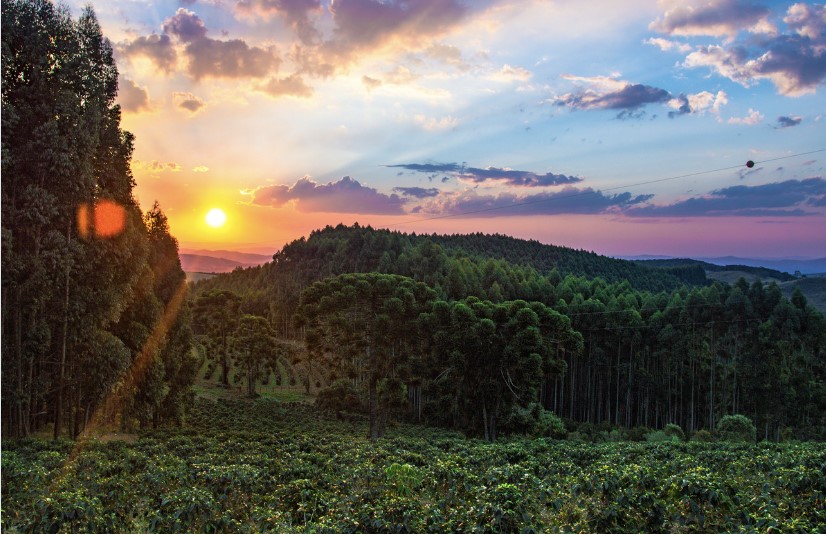
Landscapes are an appealing subject for drawings, but it can be difficult to know where to start. In this program we will learn how to select a landscape, create a sense of depth and volume, and use a variety of marks to capture a dynamic variety of textures.

Religion in Times of Earth Crisis

Religion in Times of Earth Crisis: The Practice of Wild Mercy: Something Deeper Than Hope

Zoom

Can personhood be granted to mountains, lakes, and rivers? What does it mean to be met by another species? How do we extend our notion of power to include all life forms? And what does a different kind of power look like and feel like? Wild Mercy is in our hands. Practices of attention in the field with compassion and grace deepen our kinship with life, allowing us to touch something deeper than hope. Great Salt Lake offers us a reflection into our own nature: Are we shrinking or expanding?

Speaker: Terry Tempest Williams, HDS Writer-in-Residence
Moderator: Diane L. Moore, Diane L. Moore, Associate Dean of Religion and Public Life

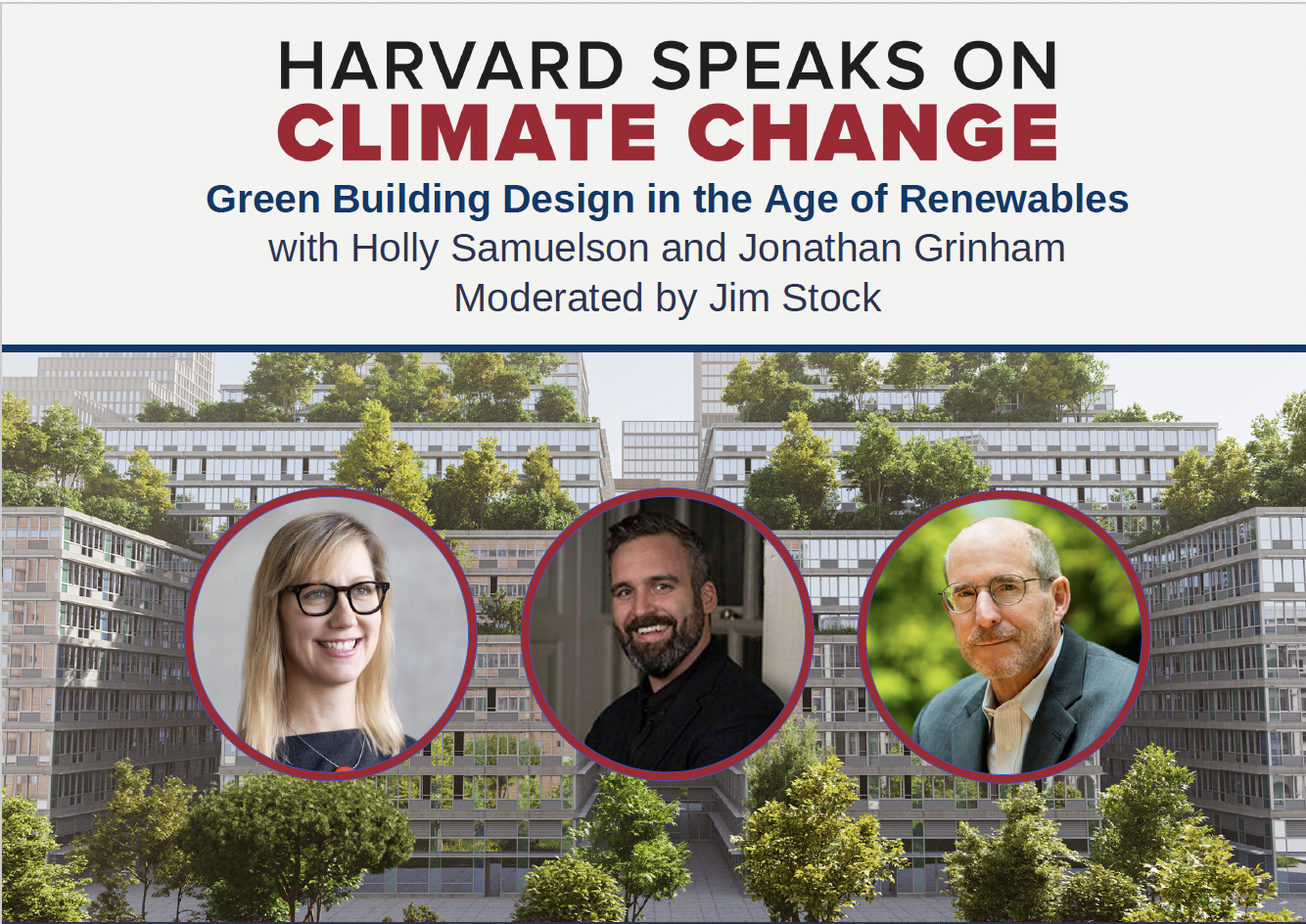
Harvard Speaks on Climate Change: Green Building Design in the Age of Renewables

Zoom

The Salata Institute for Climate and Sustainability and the Vice Provost Office for Advances in Learning present Harvard Speaks on Climate Change, a new series featuring Harvard faculty working on different dimensions of the climate challenge. In this upcoming session, Harvard Graduate School of Design Professors Holly Samuelson and Jonathan Grinham will discuss how green building design is adapting and evolving in the context of renewable energy sources. The faculty will explore how renewable energy sources are integrated into building design to reduce reliance on fossil fuels and minimize carbon emissions. Vice Provost for Climate and Sustainability and Director of the Salata Institute, Jim Stock, will host. This series is part of the collection of VPAL Signature Events and is co-sponsored by the Harvard Alumni Association.

Religion in Times of Earth Crisis

Religion in Times of Earth Crisis: Apocalyptic Grief: Reckoning with Loss, Wrestling with Hope

Zoom

Human-caused climate change already contributes to manifold global disasters. As the planet inevitably continues to warm, these disasters will be routine and unrelenting. Addressing the reality of loss must become a basic spiritual task of our climate present and future, along with summoning the resolve to respond to all our losses. In this session, Matthew Ichihashi Potts will consider the apocalyptic roots of the Christian tradition in order both to diagnose how Christianity has contributed to the present crisis, as well as to suggest possibilities for a different way forward. Through particular attention to grief and hope as religious categories, and with specific reference to various moments and movements from within the Christian tradition, Potts will reflect upon the spiritual crisis at the heart of climate catastrophe and suggest the potential for a religious response.

Speaker: Matthew Ichihashi Potts, Plummer Professor of Christian Morals and Pusey Minister in the Memorial Church
Moderator: Diane L. Moore, Diane L. Moore, Associate Dean of Religion and Public Life

Young Adult Literature Authors and Climate Justice: Discussion with Nnedi Okorafor

Zoom

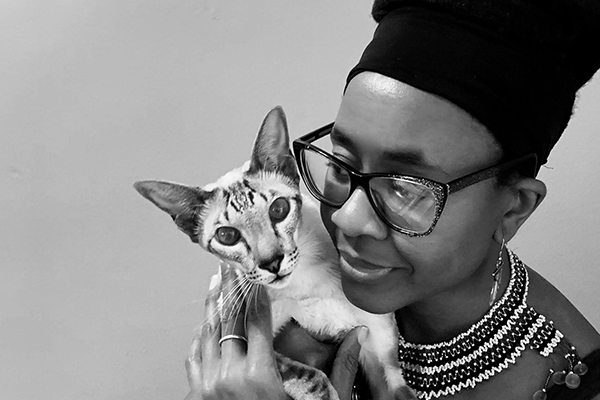
Literature can move people of all generations, including students and educators, as well as scientists, policy makers, journalists, and the public. In this program, award-winning author Nnedi Okorafor will converse with “Massachusetts Super Librarian” Liz Phipps-Soeiro on how writing, reading, and teaching books and comics with themes of climate change and climate justice can encourage young people to learn and think about these issues, while demonstrating the powerful impact of the arts and literature in our communities.

Young Adult Literature Authors and Climate Justice: Discussion with Nnedi Okorafor

Zoom

Literature can move people of all generations, including students and educators, as well as scientists, policy makers, journalists, and the public. In this program, award-winning author Nnedi Okorafor will converse with “Massachusetts Super Librarian” Liz Phipps-SoeiLiterature can move people of all generations, including students and educators, as well as scientists, policy makers, journalists, and the public. In this program, award-winning author Nnedi Okorafor will converse with “Massachusetts Super Librarian” Liz Phipps-Soeiro on how writing, reading, and teaching books and comics with themes of climate change and climate justice can encourage young people to learn and think about these issues, while demonstrating the powerful impact of the arts and literature in our communities. ro on how writing, reading, and teaching books and comics with themes of climate change and climate justice can encourage young people to learn and think about these issues, while demonstrating the powerful impact of the arts and literature in our communities.

Religion in Times of Earth Crisis

Religion in Times of Earth Crisis: Animal Stories, in Crisis

Zoom

Across the Indian Ocean world, communities have shared stories while encountering legacies of modern state-centrism, colonial capitalism, post-colonial environmental destruction and religious reform. Muslim communities, among others, have shared stories of religious environments and animals that were inherited, transmitted, and reinterpreted in light of evolving ecological crises. These stories of multispecies ancestors and colonizers, Islamic conceptions of the environment, and narrative traditions of Islamic ecological care have confronted cycles of crises with visions of pasts and futures. In this session, Teren Sevea will discuss the question, “Can listening to these stories compel us to re-evaluate our academic approaches to religion and environments and the relationship of religious pasts and presents, in our time of crisis?”

Religion in Times of Earth Crisis

Religion in Times of Earth Crisis: Ancestors and Climate in Our Boston Backyard

Zoom

Two hundred years ago, the residents of metropolitan Boston faced a climate crisis. White settlers had destroyed the region’s pine forests, triggering dangerous disruptions to both water and carbon cycles. Activists responded by creating forest parks on previously disrupted landscapes. But many of these activists were themselves descended from the settlers who had caused the harm they sought to heal. In imperfect yet instructive ways, they blended ecological care with new forms of ancestral devotion. Gradually they learned what indigenous communities had long known: that care for the more-than-human-world is inseparable from care for our ancestors. In this session, Dan McKanan, will discuss these stories and how they can help contemporary Bostonians, and others, recognize that what makes a place wild is not the absence of humans but the presence of ancestors.

Religion in Times of Earth Crisis

Religion in Times of Earth Crisis: A Procession of Catastrophes

Zoom

Environmental catastrophes can create a break in the experience of time, they can rupture the possibility of collective meaning. Yet for communities shaped by colonialism and racism, this rupture can only be understood in relation to the past, as an event in the “unceremoniously archived procession of our catastrophes,” to use Édouard Glissant’s words. Histories of colonial and racial devastation teach us that environmental futures are linked to our pasts. We may describe them as “ancestral catastrophes,” as Elizabeth Povinelly suggests. In this session, Mayra Rivera explores the question, “How may we engage those stories in ways that honor our pasts and open possibilities for different futures?”

Speaker: Mayra Rivera, Andrew W. Mellon Professor of Religion and Latinx Studies
Moderator: Diane L. Moore, Diane L. Moore, Associate Dean of Religion and Public Life

Inspired by Nature: Drawing from Your Imagination

Zoom

Looking closely at nature can inspire a broad range of imaginative artwork, from abstraction and decorative work to illustration and cartooning. In this workshop, we will use a variety of examples from nature as inspiration, and then explore techniques for unleashing our creativity through the drawing process.

Class size will be limited to twelve, allowing ample time for individual feedback. All skill levels are welcome.

Taught by artist and illustrator, Erica Beade.

Harvard Speaks on Climate Change: Climate Politics and the Energy Transition

Zoom

The Salata Institute for Climate and Sustainability and the Vice Provost Office for Advances in Learning present Harvard Speaks on Climate Change, a new series featuring Harvard faculty working on different dimensions of the climate challenge. In this session, Professors Dustin Tingley and Gordon Hanson will explore the political, economic, and social challenges surrounding the energy transition. Dustin will share insights from his recently released book co-authored with Alexander Gazmararian, Uncertain Futures: How to Unlock the Climate Impasse, and Gordon will discuss his research on mitigating the economic impacts of the energy transition on workers, a key initiative of the Kennedy School’s Reimagining the Economy Project, which he co-directs with Dani Rodrik. Vice Provost for Climate and Sustainability and Director of the Salata Institute, Jim Stock, will host. This series is part of the collection of VPAL Signature Events and is co-sponsored by the Harvard Alumni Association.