Supporting our Natural Environment
Sustainable Site Maintenance
Cultivating a Healthier, More Resilient Campus
Harvard’s outdoor landscapes are an essential part of a healthy, thriving campus and a living laboratory for learning, research, and
community. Through sustainable site management practices, the
University seeks to protect the health and wellbeing of students,
faculty, staff, and visitors by avoiding toxic pesticides and other
hazardous chemicals whenever feasible. By prioritizing
preventive, integrated, and least-toxic approaches to landscape
care, Harvard also works to strengthen biodiversity, support
resilient ecosystems, and steward the natural systems that
contribute to a more sustainable and vibrant campus
environment.
Strategies for Healthier Landscaping
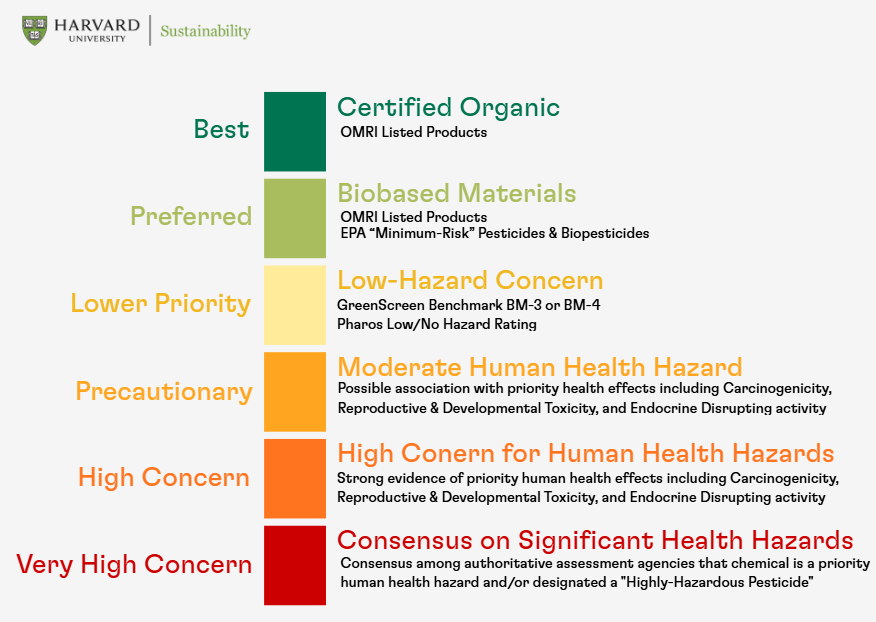
Science-Based Framework for Hazard Assessment
Harvard seeks to minimize the use of synthetic
pesticides and fertilizers whenever feasible. When their
use is necessary, the University prioritizes avoiding
products identified by leading scientific and regulatory
authorities as posing the greatest risks to human and
environmental health. Harvard’s framework draws upon
assessments from the following agencies:
- Pesticide Action Network (PAN) International
- World Health Organization (WHO) Recommended Classification of Pesticides by Hazard
- The International Agency for Research on Cancer (IARC)
- The Globally Harmonized System of Classification and Labelling of Chemicals (GHS)
- U.S. Environmental Protection Agency (U.S. EPA)
- EU Categorization of Endocrine Disruptors
- Stockholm Convention – Persistent Organic Pollutants
- Rotterdam Convention on the Prior Informed Consent
- Procedure for Certain Hazardous Chemicals and Pesticides in International Trade
- Montreal Protocol on Substances that Deplete the Ozone Layer
Sustainable Landscaping Standards
Harvard’s Sustainable Site Maintenance (Landscaping) Standards outline the core requirements of a process-driven, holistic approach to land stewardship focused on the performance of natural systems, conservation, health, and innovation. We prioritize the creation of healthier, more resilient landscapes for environmental, animal, and human health. They apply to the major landscaping vendors on Harvard’s campus, and are provided as a resource for Harvard’s Schools and Units to hold their vendors accountable in key priority areas.
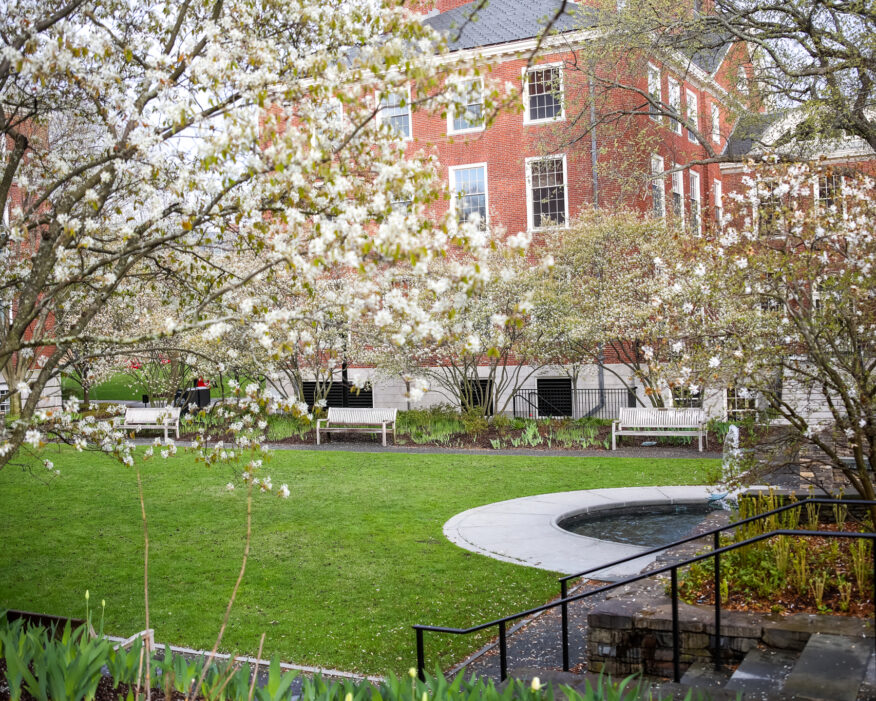
Harvard Landscape Services Organic Maintenance Program
Since 2008, Harvard’s Landscape Services team has implemented a soil-focused, science-based program that reduces the use of synthetic pesticides and supports healthier, more resilient campus landscapes. Their practices include aeration, overseeding, compost tea applications, the use of native plants in rain gardens, pollinator gardens, and bioswales to enhance biodiversity and soil health.
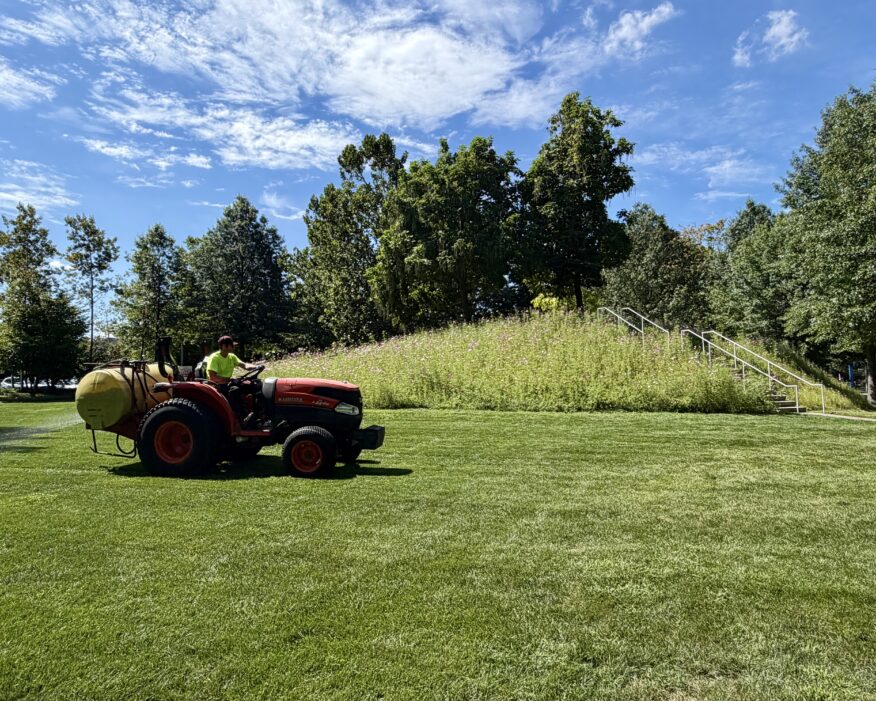
United by Nature
Harvard Landscape Services, in collaboration with the Office for Sustainability, recently earned Green Grounds Certification from United by Nature in recognition of their long-term commitment to organic land care.