Harvard Recycling Valentine’s Day Toiletries Drive

Harvard University Surplus Center 28 Travis Street, Allston, MA, United States

It’s time for the annual Harvard Recycling Valentine’s Day Toiletries Drive! From now through February 12, you can help support Cambridge’s YWCA by donating unused and unopened toiletries, cosmetics, and menstrual hygiene products.

Coyote Walk

Bussey Street Gate

With mating season just getting started, February is one of the best times to see signs of the Arboretum's resident coyote population. Join Horticulturist and wildlife enthusiast Brendan Keegan to look for coyote tracks and scat, check our trail cameras, and find out why all these coyotes are in Boston in the first place.

Harvard Recycling Valentine’s Day Toiletries Drive

Harvard University Surplus Center 28 Travis Street, Allston, MA, United States

It’s time for the annual Harvard Recycling Valentine’s Day Toiletries Drive! From now through February 12, you can help support Cambridge’s YWCA by donating unused and unopened toiletries, cosmetics, and menstrual hygiene products.

Harvard Recycling Valentine’s Day Toiletries Drive

Harvard University Surplus Center 28 Travis Street, Allston, MA, United States

It’s time for the annual Harvard Recycling Valentine’s Day Toiletries Drive! From now through February 12, you can help support Cambridge’s YWCA by donating unused and unopened toiletries, cosmetics, and menstrual hygiene products.

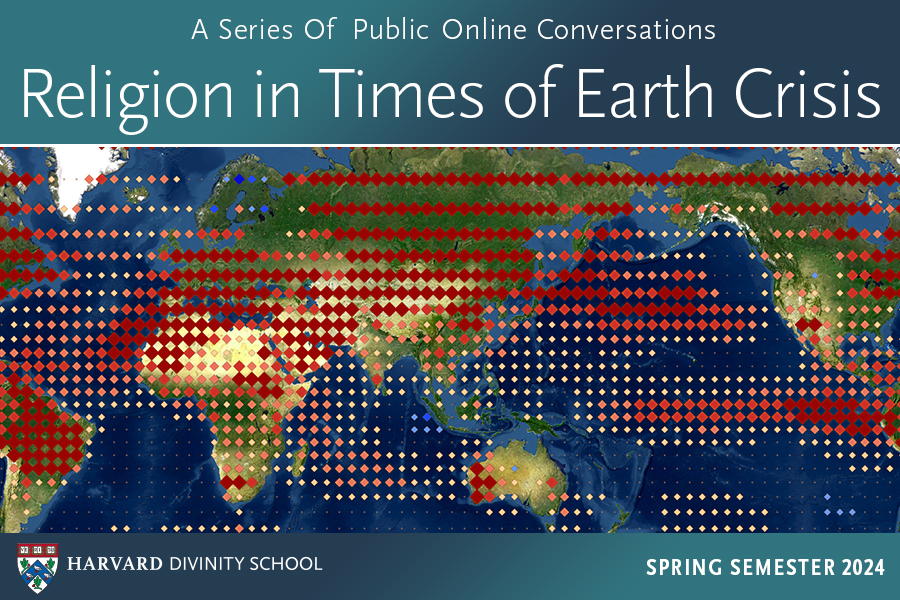
Religion in Times of Earth Crisis

Religion in Times of Earth Crisis: Animal Stories, in Crisis

Zoom

Across the Indian Ocean world, communities have shared stories while encountering legacies of modern state-centrism, colonial capitalism, post-colonial environmental destruction and religious reform. Muslim communities, among others, have shared stories of religious environments and animals that were inherited, transmitted, and reinterpreted in light of evolving ecological crises. These stories of multispecies ancestors and colonizers, Islamic conceptions of the environment, and narrative traditions of Islamic ecological care have confronted cycles of crises with visions of pasts and futures. In this session, Teren Sevea will discuss the question, “Can listening to these stories compel us to re-evaluate our academic approaches to religion and environments and the relationship of religious pasts and presents, in our time of crisis?”

Thinking with Plants & Fungi Series: Luis Eduardo Luna

Common Room, Center for the Studies of World Religions 42 Francis Avenue, Cambridge, MA, United States

In this conversation, we will explore the science and philosophy of plant intelligence. What have cutting-edge experiments and observational research taught us about plants’ intelligence, agency, or even sentience? How do plants help us rethink these categories? What are the criticisms of these findings, and why? How, if at all, can plant science inspire new forms of care, cooperation, and interspecies relations? What do we still have to learn and explore?

Freecycle | February 2024

Smith Campus Center

Due to inclement weather, this event has been rescheduled from Tuesday, February 13 to Tuesday, February 20. -- Come Freecycle with us!  This popular recurring reuse event, the Freecycle, is like a yard sale where everything is free. The Freecycle promotes reuse by giving you a chance to: Donate items you no longer need and pass […]

Young Adult Literature Authors and Climate Justice: Discussion with Nnedi Okorafor

Zoom

Literature can move people of all generations, including students and educators, as well as scientists, policy makers, journalists, and the public. In this program, award-winning author Nnedi Okorafor will converse with “Massachusetts Super Librarian” Liz Phipps-SoeiLiterature can move people of all generations, including students and educators, as well as scientists, policy makers, journalists, and the public. In this program, award-winning author Nnedi Okorafor will converse with “Massachusetts Super Librarian” Liz Phipps-Soeiro on how writing, reading, and teaching books and comics with themes of climate change and climate justice can encourage young people to learn and think about these issues, while demonstrating the powerful impact of the arts and literature in our communities. ro on how writing, reading, and teaching books and comics with themes of climate change and climate justice can encourage young people to learn and think about these issues, while demonstrating the powerful impact of the arts and literature in our communities.

Young Adult Literature Authors and Climate Justice: Discussion with Nnedi Okorafor

Zoom

Literature can move people of all generations, including students and educators, as well as scientists, policy makers, journalists, and the public. In this program, award-winning author Nnedi Okorafor will converse with “Massachusetts Super Librarian” Liz Phipps-Soeiro on how writing, reading, and teaching books and comics with themes of climate change and climate justice can encourage young people to learn and think about these issues, while demonstrating the powerful impact of the arts and literature in our communities.

Lessons from Latin America: Biodiversity & Nature Based Solutions

Wexner W-434 A.B. 79 John F. Kennedy Street, Cambridge, MA, United States

Biodiversity collapse is happening but there is hope. All Harvard affiliates are invited to join for an intimate Q&A where we will delve into the rich biodiversity of Latin America and explore nature-based solutions from the Latin perspective. Speakers will share the latest insights on conservation efforts, sustainable practices, and innovative political strategies to address biodiversity collapse. Don't miss this opportunity to learn from climate leaders in the field.

Religion in Times of Earth Crisis

Religion in Times of Earth Crisis: Apocalyptic Grief: Reckoning with Loss, Wrestling with Hope

Zoom

Human-caused climate change already contributes to manifold global disasters. As the planet inevitably continues to warm, these disasters will be routine and unrelenting. Addressing the reality of loss must become a basic spiritual task of our climate present and future, along with summoning the resolve to respond to all our losses. In this session, Matthew Ichihashi Potts will consider the apocalyptic roots of the Christian tradition in order both to diagnose how Christianity has contributed to the present crisis, as well as to suggest possibilities for a different way forward. Through particular attention to grief and hope as religious categories, and with specific reference to various moments and movements from within the Christian tradition, Potts will reflect upon the spiritual crisis at the heart of climate catastrophe and suggest the potential for a religious response.

Speaker: Matthew Ichihashi Potts, Plummer Professor of Christian Morals and Pusey Minister in the Memorial Church
Moderator: Diane L. Moore, Diane L. Moore, Associate Dean of Religion and Public Life