Sustainability Case Study: David Rubenstein Treehouse Conference Center
Construction Completed Fall 2025
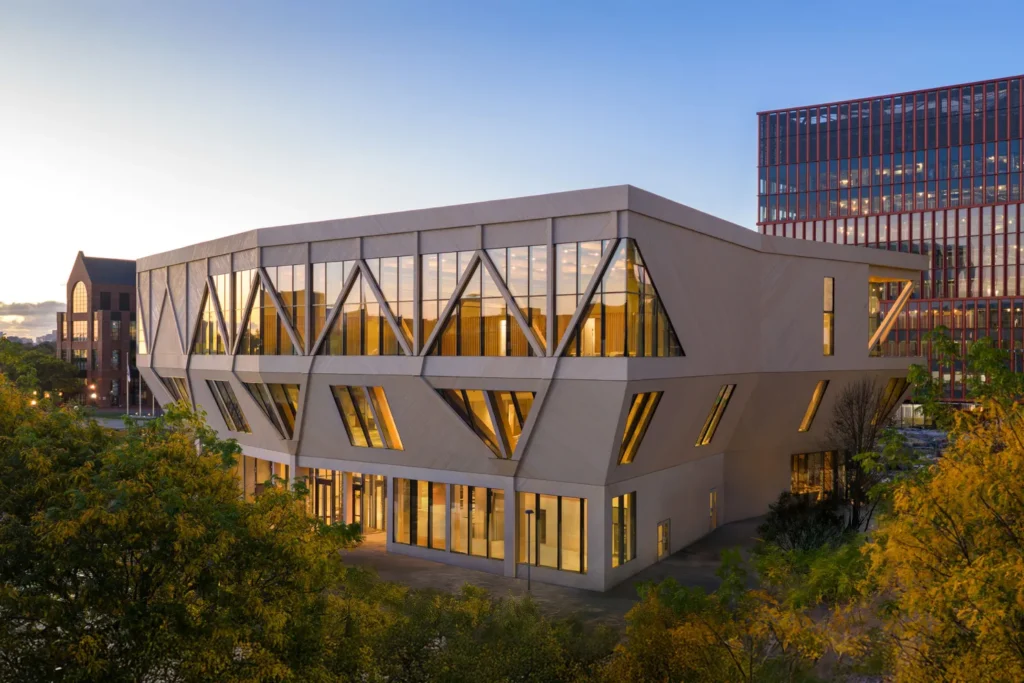
The David Rubenstein Treehouse is Harvard’s first University-wide conference center, designed to create a unique visual experience for visitors and to facilitate collaboration and social connection. The building exemplifies sustainability leadership and will serve as the “front door” to the adjacent Enterprise Research Campus (ERC) in Allston. It was made possible by a gift from David Rubenstein, whose history of giving and service to Harvard extends over the past several decades.
The new 55,000 square foot conference center served as a pilot project to Harvard’s 2024 Sustainable Building Standards (SBS). The SBS target Living Building Challenge Core certification (LBC Core) from Living Future, achievement of Harvard’s Healthier Building Academy (HHBA), and designing climate-resilient buildings without fossil fuels. LBC Core is a performance-based, sustainable building certification that is holistic in its focus across climate, health and community outcomes.
Certifications:

Targeting Living Future’s Living Building Challenge (LBC) Core Green Building Certification

Targeting Living Future’s Living Building Challenge Petal Certification (Materials)
Project Highlights
The David Rubenstein Treehouse Conference Center (Rubenstein Treehouse) is a leading example of holistic sustainability performance addressing climate, health and community. It is Harvard’s first mass timber building and the first dedicated conference center to pursue Living Building Challenge Core and Materials Petal certifications from the Living Future Institute.
Explore the drop-down to the right to learn more about project highlights.
Health
Health and sustainability are woven into every detail of the Rubenstein Treehouse. By using the Harvard Healthier Building Academy (HHBA) framework, a health-led sustainability strategy informed design decisions throughout the Rubenstein Treehouse—better indoor air quality, healthier materials without classes of harmful chemicals like PFAS/forever chemicals, access to daylight and zero fossil fuels in the building. All materials were researched for health, more than 75 products are HHBA–compliant and the rest are best-in-class for health, and the building is designed to provide 75% more outside air than required.
Explore the drop-down sections to the right to learn more about health achievements.
Climate
The Rubenstein Treehouse demonstrates Harvard’s leadership and alignment with the University’s Sustainability Action Plan and Fossil Fuel-Free by 2050 goal. The building has zero fossil fuels in the building and reduced embodied carbon by 60%.
Explore the drop-down sections to the right to learn about energy and emissions and embodied carbon reductions.
How We Build
Harvard is accelerating sustainable building to enhance health, productivity, and quality of life on campus – as well as for those in our value chain and their communities.